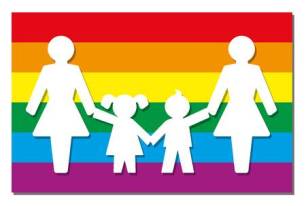
The standard nuclear family is becoming an idea of the past since families with a father, as the breadwinner, stay at home mother, and their biological children, is no longer the norm. Wells (2015) stated that “new social phenomenon changes the rules – the emergence of gay and lesbian families is a good example of this”. The traditional nuclear family is being replaced with all different kinds of families. Is this a positive change? I SAY YES.
Even in our supposedly modern society, this trend remains quite controversial. Some religions believe that being with someone of the same sex is a sin and frowned upon. Some older generations have still not come around to the idea of same sex couples and are stuck on this idea of the nuclear family being the only appropriate or acceptable form of a family. Same-sex marriages have been subjected to scrutiny when applying for health or social benefits. There is much debate surrounding issues such as transgender individuals, and the many gender identities that have been recognized recently. Despite these repressive ideas of social conservatism, the change to inclusiveness in modern family structures prevails.
Today, we have a wide range of different family structures, some of which include same sex couples, adopted children, extended families, fostered children, and the list goes on and on. For over 5000 years, the nuclear family has been known as the ideal family. In the 20thcentury, the family structure with a heterosexual married couple and their biological children was known as the ontological family type. The male head of the family would go out to the workforce while his wife stayed home with the kids or to do housework. This began to change with industrialization, and became prevalent when men went to war, creating the need for women to take over the workforce. Today, men and women share all tasks that were previously only designated for one or the other, therefore same sex couples are just as capable of completing tasks in and out of the home. The times are changing and different family structures are becoming more common and widely accepted. Until recently, the LGBTQ+ community was not understood or accepted as an appropriate lifestyle.
Today, society is becoming much more accepting of this community. As a result of this new acceptance, we also see many unique families being formed openly. Same-sex couples who wish to have children can now adopt or foster a child. This provides many children around the world who are in need of a family, the opportunity to be a part of one. If two people love each other and have the ability to care for and love a child, is there any reason why they should be denied the opportunity to adopt or foster a child in need of a loving home? Should same-sex couples be denied access to surrogates for reproduction? I believe that the paramount consideration is what is in the best interest of the child, to ensure their rights and protections, NOT to condemn or exclude adults based upon their personal sexual orientations
Of course, there will be some same-sex couples who are not fit to be parents just as there are heterosexual couples who are considered unfit parents. Therefore, all potential parents are on an equal playing field. Studies have shown that children raised by same sex couples are just emotionally and socially adjusted as their peers from traditional nuclear families. (Click Here For More Information)
Furthermore, Statistics Canada states that in 2011, there were 7700 children aged 24 and under living with female same sex parents and 1900 children aged 24 and under living with male same sex parents. Yearly statistics show that modern family structures are on a steady incline. (Click Here For More Information)
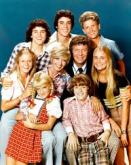
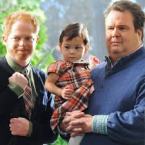
Today, we are seeing much more acceptance of diverse couples starting their own families, as demonstrated through adoption and fostering on television. This truly illustrates how the times have changed, as you would never have seen this represented in television shows in the past. In the past, television series about families had almost always shown a nuclear family structure. For example, shows such as “Leave it to Beaver” and “The Brady Bunch”, depicted the stereotypical nuclear families of the 1950’s through to the 1970’s. Although “The Brady Bunch” challenged social norms by having a blended family, it still showed the stereotypical family unit with a mother, father, and their children. Continuing with this tendency, television production has constantly evolved so that today we see sitcoms such as “Modern Family” or “The Fosters”, which both display the lives of same sex couples with adopted children as well as fostered children. What we see on television mirrors the norms that are prevalent in society at the time. These very different decades have brought their viewers many diverse interpretations on what can constitute a family.


Resources Used:
- O’Neill, T. (2018) Lecture 5 (PowerPoint). Retrieved from Brock University
- Wells, K (2015). Childhood in a Global Perspective. Cambridge: Polity
- Shanahan, S. (2005). The Changing Meaning of Family: Individual Rights and Irish Adoption Policy, 1949-99

 Family Structures Over Time
I really enjoyed how you stated your opinion and highlighted the importance of the changing “normal” family. I agree that the definition and image of family has changed over time. I also enjoyed how you used media from the past and present that depict different families. Shanahan (2005) also speaks about in earlier days like in the 1950s and 1960s, families were defined by the status of the mother and the mother would be the one to create the family and the father would have completed the family but that the real family starts with the mother. I think your blog questions this statement in a good way and proves how this is not the norm anymore but that families can differ from each other around the world.
LikeLike
I really enjoyed reading your blog. This topic on the “nuclear” family still exists in our society and is seen as something to be followed, and all others are seen as unacceptable or don’t fit the definition of what makes a family as the norm. I really liked how you drew emphasis on your own definitions of what makes a family in relation to same sex, adoption and fostering. In addition to your point, of the nuclear family being known as the ideal family for over 5000 years, drawing on family as a social reproduction strengthens this point. As stated by Well (2015), the family became the primary site of this social reproduction as a “social wage” that provides necessities for the reproduction of life- both maternal and cultural values. Overall, I believe that drawing on television shows created a great representation in relation to your blog as well.
LikeLike
Great blog! I agree with your notion that the idea of family has changed and is continuing to change. I wanted to elaborate on your discussion of Professor O’Neill explanation of how the older generations think based on the time period which they grew up in such as, men were the head of the house hold and they were the “breadwinner” while women, stayed home and did the house work. Past generations grew up in a much different time period with different societal ideologies which would impact their thinking for the rest of their lives, and what they understand to be true. Due to this, the older people may not want to accept this change to their known idea of what a “family” is and the different roles. In comparison to use young people, we have grown up and still growing up in a very different time period and society ideology. This allows us to see the idea of “family” differently and be more accepting of the change from the nuclear family to a diversity of families.
LikeLike
Hi Vanessa,
I love your insight in this article when it comes to the theme of ‘the changing family’. its 2018 and I feel that the idea of the norms of a family back in the past is not as accurate with the time that we are living in. Also, you can mention the argument that Shanahan (2005) presents in her article about the changing family she mentions how they reveal a particular national vision of children , women and family is made equal with international norms and policies. they illustrate both how states decided and translate international humans, norms and principles. Therefore showing the past and then speak about the process we have made as a society. Overall its a well thought article, good job.
LikeLike
I find the topic of your blog very interesting since the nuclear family is becoming more and more uncommon in our present society. I think it is important that you mentioned that blended families are not only created through same sex marriages, but are formed in a variety of ways such as single parenthood and adoption. We can look at Suzanne Shanahan’s article, The Changing Meaning of Family: Individual Rights and Irish Adoption Policy,1949-99, for some insight on the history of the nuclear family. The article shows the history of the criteria for family. There was a huge change in society’s view of “family” when adoption policy became legal, since the nuclear family was no longer the only form of family. Society is constantly advancing, for the better, especially pertaining to the acceptance of others and others lifestyles. I think your blog did a great job capturing the changes of family’s criteria by explaining the fairly recent social acceptance of same sex marriages and blended families. The video in your blog supported your ideas well and highlighted the fact that individuals can define family differently. Great job!
LikeLike